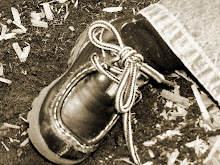
When I knew him he was twelve years old and in the sixth grade, that awkward and glorious first year of middle school. He loved English class and was less enthusiastic about Mathematics, but diligent about completing his homework. He was a fan of college basketball, football, and track and field. Most afternoons he joined his friends at a local after school teen club where they played sports, checked out girls, and just "hung out". The TV was permanently set to MTV whenever he had any say about the matter. When given the chance he came home with a trombone to play in the middle school band and used his pencils as drums far too often. He was one cool kid.
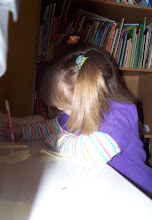
She was three years old and the definition of independence. She wore only the clothes that she wanted to wear because the battles to try to convince her to wear anything else were far too great. She did everything on her terms and would refuse to cooperate with a direction to then do the exact same thing a minute later as long as no one told her to do so. At the age of three she was bilingual, working with a third language, and could easily switch between the languages based upon the situation and her needs. After being exposed to the book Brown Bear, Brown Bear for a week at school she took it to the reading corner and "read" it word for word from memory, turning the pages at the right times and adding dramatic flair. If she did not want to do something, there was little chance of changing her mind. She was shy around others but also a flirt with her smiles and waves and a chatterbox when she was at play. I lost debates with her frequently.
He is six years old and has the best sense of humor I have ever seen in a child. You have to be very careful what kind of jokes or comments are said around him because he picks them up and understands things that he is far too young to understand. He is a superflirt with the Kindergarten girls, and girls in general and has quite the fan club. He does not hesitate to make his opinion known and has his own opinion and view about almost everything. One of his favorite ways to amuse himself is to test every new adult he meets by trying to see exactly how far he can push them. He loves technology and working with computers. He also loves watching car races, Disney movies, and Pirates of the Carribean. He hates girly movies.
These are just three of the many children I have met and loved that have also happened to have mental retardation. They are not stupid or uncool, and they deserve more respect than to have to face a world where they are bombarded with the word "retarded" being thrown at them as a slang term for things that are uncool or displeasing or hated. They deserve acceptance, respect, dignity, and equality. They are kids who have more in common with their peers than they have differences. How long will it take us as a society to learn this fact?
Thursday, February 5, 2009

Sunday, February 1, 2009
Sticks and Stones
I know that this spring/summer there was a great deal of debate over the terminology used to refer to individuals with cognitive disabilities or delays due to the movie Tropic Thunder. I stayed out of that debate because I felt that based upon the quality of the movie, those who would pay attention to the debate would never have attended the movie to begin with and vice versa. However, I have noticed since that time that the word "retarded" has become a standard slang phrase amongst not just teenagers in middle and high school but far too many adults as well to refer to anything that they may find senseless, odd, or to their disliking. This horrifies me because this is a word with power. All words have power, but words that have been used to identify people, to segregate and isolate and dehumanize people are especially powerful. The word "retarded" has a long, dark history that includes institutionalizations, forced sterilizations, and eugenics. It is a heavy, weighted, sharp and cutting word and among probably the top powerful and historically weighted words in the English language. So why is it suddenly considered acceptable to take this word and throw it in the face of those for whom mental retardation is a medical reality? To mock it, to ridicule it, to turn it into an insult? Words have the ability to dehumanize, to disrespect, to rip apart people and to take a label that someone already has to bear and turn it into an insult, to ridicule it and make it a joke is beyond dehumanizing. It not only dehumanizes individuals with mental retardation but it dehumanizes those callous enough to believe it is appropriate to utilize the words in this manner. It reveales a depth of ignorance and supposed superiority that is astonishing. It reveals just how far we have not come since the days of eugenics and institutions.
Another powerful word is the word wheelchair. It sounds simple, until it is used in place of any other identifying feature and the person using the wheelchair is referred to as "a wheelchair" or "the wheelchair". This is dehumanizing and demeaning and disrespectful. Just because someone relies upon an alternate mode of ambulation does not mean that their mode of ambulation defines them; they are not "a wheelchair" anymore than someone who walks for ambulation is "sneakers". It turns a human being with thoughts, feelings, emotions, worth and value into nothing more than an object that is worth less and too often worthless. To define an entire life by its limitations instead of its humanity, its successes, its uniqueness is ignorant, is painful, is injustice by definition, and is unethical/immoral. No one wants to be defined by the areas in whic they struggle or by the differences that the world has not yet learned to value; everyone wants to be defined as a unique individual. To have words that may already be a burden become callous jokes or inappropriate summaries of your existence is unacceptable. Sticks and stones may break just bones, but words destroy the soul.
Another powerful word is the word wheelchair. It sounds simple, until it is used in place of any other identifying feature and the person using the wheelchair is referred to as "a wheelchair" or "the wheelchair". This is dehumanizing and demeaning and disrespectful. Just because someone relies upon an alternate mode of ambulation does not mean that their mode of ambulation defines them; they are not "a wheelchair" anymore than someone who walks for ambulation is "sneakers". It turns a human being with thoughts, feelings, emotions, worth and value into nothing more than an object that is worth less and too often worthless. To define an entire life by its limitations instead of its humanity, its successes, its uniqueness is ignorant, is painful, is injustice by definition, and is unethical/immoral. No one wants to be defined by the areas in whic they struggle or by the differences that the world has not yet learned to value; everyone wants to be defined as a unique individual. To have words that may already be a burden become callous jokes or inappropriate summaries of your existence is unacceptable. Sticks and stones may break just bones, but words destroy the soul.
Tuesday, January 20, 2009
Lessons Learned
I thought that I had a decent awareness and understanding of concepts like accessibility and inclusion, of not just tolerance but acceptance of individuals with disabilities in society as equals especially because of my experiences as a special education teacher and advocate for inclusionary practices in education. Perhaps my awareness and education about the subject was greater than average, but it was still so incomplete. This has become clear to me recently as I have found myself interacting with the world from the position of one requiring a wheelchair for mobility due to a still unexplained loss of muscle strength and change in muscle tone. I have discovered that accessibility is so much more than I would have ever imagined. There are so many subtle issues to being able to access a store or a building that I never considered, far beyond whether there are stairs or a ramp. Things like adequate aisle space, objects cluttering and blocking the aisles, the positioning of so many objects so far out of reach, and certain areas of stores being designed in such a way that it is impossible to access them in a wheelchair. It is also attitudes. I have been blatently stared at while out in public countless times, as if my humanity disappeared the minute I ceased to use my legs as my primary source of mobility. Then there is the constant assumption that because I am using a wheelchair to access the world, I must have surrendered a great portion of my intelligence as well. My heart breaks for how my kids must be treated in public, the stares and comments and the lack of dignity when they are spoken to and how desperately they must long for a way to communicate the message that they are still kids and to get over it. I have to rely upon publc transportation right now, since my vehicle is still hundreds of miles away and I do not think I would be permitted to drive anyway, and this too has been a startling experience. It has been engrained into my being that all people are people first and then they may happen to be people with a disability, but apparently few people in the world recognize this. I have been referred to as "a wheelchair" more times than I can count. I am not a wheelchair anymore than someone who walks is sneakers - my method of mobility does not define me- yet how often this happens to my kids breaks my heart. They are automatically defined not by their unique personality, not by the fact that they are children, but by their diagnoses and disabilities. For convenience, for ignorance, for prejudice, for simple labels they are reduced to that with which they struggle instead of all that is so gloriously right and perfect and beautiful and incredible about them. My first year teaching I heard my assistant refer to my children who were non-ambulatory as "wheelchairs" and gently, but firmly explained that I would not tolerate such language never expecting to hear it again. I am saddened that so much ignorance remains and to know that this is the world my kids are up against. Yet I am all the more proud of them for their spirits, for their determination, and for their families who are unwilling to conform to the definitions provided by the world for their children or themselves. Right now seems like a very difficult time in my life as I am having to fight so hard to regain all that I have lost, but I have also gained so very much. I have gained such incredible insight and awareness of the world faced by my kids and their families that I could have never known without living it myself, and I will treasure the wisdom and appreciation from this journey that has changed my heart forever. If anything this will have made me a more dedicated, passionate, compassionate, aware, and advocate teacher.
Monday, December 29, 2008
Coup
I have not written here in a long time, and that is because I have been busy trying to fight back the coup that my body is staging against me. Apparently it does not appreciate the governmental system of my body, but since this is not a democracy but a monarchy (I am the Queen in charge of this vessel) it is just going to have to deal. Since October 23 I have spent 22 days total inpatient in two different hospitals and countless days undergoing outpatient testing. So far I have received the brilliant diagnoses of malnutrition and failure to thrive, which I believe are a given since I have lost over 25% of my body weight since October 23 and certainly can not intake enough of anything to get the nutrition I need. However, without a cause that is clearly defined on their testing (and dysautonomia does not cooperate like that) the doctors refuse to do anything other than monitor the weight loss and provide some supplements. I am also going to be receiving PT and OT services since the malnutrition triggered rapid, progressive muscle weakness and worsened the ataxia. My two new escorts are my wheelie walker for very short distances (about 100 feet or less) and my wheelchair for anything longer than that. I think they sent over a child sized wheel chair because while the seat is perfect, the leg supports are too short if I put my legs up any higher than down at 90 degrees (which is uncomfortable) even on their longest extension. So my wheels need some adjusting (also, a seatbelt would be helpful to keep me from falling out of the darn thing, especially when other people are driving it). I have not been able to teach since October 22, and I miss my kids beyond what words can describe. I knew that I wanted to teach special education since I was in sixth grade, so for me it is not a job so much as a dream and a purpose. To not be able to do so right now is frustrating and disheartening and painful. I want to be there with my kids, celebrating each victory and encouraging them to go beyond all expectations set for them and being creative until I find a way that works to teach and provide the information as well as allow them to communicate understanding. I detest being stuck at home (literally since I can not get down or back up the stairs), primarily in bed. I would most likely throw my TV out the window if I could do so as I by nature am not a huge TV fan (I happily went all summer without access to a TV) and after two months of this I have far surpassed my tolerance for it. I normally can not go more than a day or so without getting outside, yet I have been outside once since December 12 and that was for the ambulance ride home- stir crazy? I can only tolerate foods that are totally smooth and pureed, which means I never want to see or eat another mashed potato as long as I live once I am better, nor do I want to look at infant rice cereal. I can, however, offer recommendations on stages 1 and 2 infant food which is an odd skill to have. I am working with my home health care nurse to arrange for me to travel to where my family is while I recover, for accessibility reasons (I swear this house is trying to kill me - throw rugs, a bathroom that the walker only fits into sideways, hallways too small for a wheelchair, those stairs), safety reasons (probably not a good idea to leave a somewhat fall prone klutz with a walker home alone all day), and my willingness to ask for help (I live with amazing friends, but I hate asking for help and would rather go without or risk hurting myself than be a bother). So it looks like within the next week I will be home, surounded by my family and constantly having to remind them that medicine has never found nagging to be a cure for anything. :)
Anyway, I have not forgotten this journal but I have been engaged in medical combat with a firmly entrenched resistance force. I do have a CaringBridge journal that I started to help keep my family and friends updated, especially while I was in the hospital but I am continuing it. The address is http://www.caringbridge.org/visit/bethanysummer if you want to check that out in between entries here.
May 2009 bring us all health, safety, joy, providence, and abundant love!
Tuesday, October 14, 2008
This is inclusion
Yesterday was field day at school, a day that I both love and dread each year with my students. I love it because we get to experience the closest thing to full inclusion that exists for m kids in this county right now. We go out and participate in every single activity that I can possibly modify, adapt, or make accessible alongside the general education population without any distinctions made (no special activities are designated for us, we do not attend at a special time or sit in the back row). We are kids having fun in a swirling mob of other kids. I dread it for a few reasons: 1) the logistics of planning how to adapt activities and to "off road" our wheelchairs up and down giant hills that are never accessible, 2) the logistics of mobile "crash carts" that must be assembled and taken everywhere without attracting attention from the other kids, 3) stupid adults who don't "get it". I must say that my kids had so much fun yesterday and we were able to adapt probably 70-75% of the activities for them to participate in. Favorites included t-ball, the 50 yard dash, the sack race, and the basketball toss. Apparently I throw like a girl (um, I would be worried if I didn't). A few run-ins with clueless or even prejudiced people made my protective emper flare momentarily, but then we moved on and had a blast. For example, a really cool semi-truck came that had a bowling lane in the trailer. I could see the parts to quickly place a ramp over the steps and make it accessible but the two men running it said there was no way to make it so our wheelchairs could go into the trailer, but we were welcome to carry the kids up and inside. HUH?!? Like that is safe, or legal, or not flat-out prejudiced. After my mini-education on discrimination the guys still played (or maybe were) stupid so we just let our sweet girl who can walk cut in front of the 50 other kdis in line and have a turn. We were willing to wait in line if they were willing to make it accessible, but not otherwise. Our other run-in was with a parent volunteers at t-ball who kept directing children to go around us in line and when I pointed out that we were in line replied "well, I just saw the strollers and the babies and thought you were only watching.". WHAT?!? I quickly pointed out that they were wheelchairs, that my kids are in kindergarten, and that they don't generally like being called babies. I said this very politely, but was told not to be snipey. Whatever. We spoke loudest with the incredible hits we made and the laughter that echoed as each child ran the bases. Give us a fair chance and you will be amazed by the things we can do. Label us babies and pass us by, and you will never know the potential we hold. :) Plenty of other people made up for those two issues - a bunch of fathers working the giant parachute jumped in and helped our kids be able to run in and out from underneath the parachute and mae sure we all participated and then asked very insightful questions about our program. At the sack race, kindergarten kids who know my kids from inclusion were cheering on my kids as we raced. ;) A little girl helped my kids at the basketball toss, and at bowling countless kids cheered on my little one who got the chance to bowl. All in all it was a great day. Everyone had a great time, but most importantly they had a great time alongside their peers without any great production made about it. This is inclusion- a little adaptation, a lot of creativity, many tender hearted children, and a focus on ability rather than disability. We make it seem so much more complicated than it needs to be. And instead of the fearful unknown that it is t many teachers, it is beautiful, it is natural, it is children being children before adults muddle it up and complicate it.
Sunday, October 5, 2008
She left her handprints on my soul

She was mine for less than 6 months, but the mark she left upon my heart will last a lifetime. When you are attending college to become a special education teacher, it is a common refrain from professors and advisers and supervising teachers that you must learn to separate you heart from your job in order to avoid "burn out". Perhaps this is sage advice, but I can not fathom trying to educate a child without forming a relationship of trust with them and in turn, I can not imagine building up a relationship of trust and understanding without loving the child. The children in my class are "my kids" and I willingly take the risk of loving them, of letting them into my heart, because I simply do not know any other way to be a teacher or a human being. She was "my kid" during my first year of teaching, a rough year for any teacher and an especially challenging year for me as I was indoctrinated using the "sink or swim" method. Her arrival was timed with Christmas, and so she was my present for the new year- a beautiful little girl with a multitude of challenges, so medically fragile and willfully strong. For 5 months I celebrated her steps, I learned the meaning of each sound that she made, I puzzled over ways to prevent her from pulling out her life-sustaining tubes (trach and g-tube), I explored the world with her and her friends. Then with little notice, just weeks after her fifth birthday, she was gone. I had played the odds of teaching open-hearted and lost. At first coping was focused around her family- preparing a yearbook signed by her classmates (fingerprints that I labeled) and teachers/therapists, printing all of the photoraphs we had taken of her, gathering her artwork, colecting donations to help the family pay for travel expenses, and sending out cards to them that came in from classmates. Then coping became about making it through the rest of the year in the classroom where she was noticably missing. Finally it became about finding the peace to know that loving her was worth the pain of letting go, and that the risks are worth the rewards. Yet I could not settle on such an inward transformation not somehow being outward; this little life has forever changed mine and I needed (need) that to be evident. So in a delicate line-drawing upon my back I had a tattoo plaed of a child's cupped hands opening to release a butterfly. It is the closure I needed, the permanent reminder I hold dear of how one life short on years can have great impact, and the hope (faith) I have for the future that love is always worth the risks.
Wednesday, September 17, 2008
Conflicted
This is my first year teaching in a program for students in grades Kindergarten through 2nd grade who have multiple and/or severe disabilities. While I could write a novel already on the rapid learning I have had to experience (because no one ever thinks to provide you with necessary information until after you manage to screw up - not with the kids, with curriculum guidelines, classroom organization, unwritten rules, etc.), I am currently very conflicted about one hot button issue. Inclusion is the hot topic in our district. You would think it was a new invention the way it is being talked about and handled instead of a practice that has been demonstrated beneficial and successful at all grade levels and at all ability levels (based upon what criteria you are assessing). We are not actually anywhere near full inclusion, and I don't think anyone mentions that, but we have inclusion committees at every school and we dance prettily around the issue to keep everyone happy (or at leas amused). My class is in a general education elementary school but my students are primarily self-contained, if not entirely self-contained (the most inclusion any student receives is up to 2 hours per day). I can argue both sides of this issue convincingly after hearing all of the debates since I was in high school and am not conflicted over that. What I am conflicted over is a long-standing "tradition" at my school. Apparently it is traditional to have each and every class at each and every grade level come into my classroom to "meet" my kids, to be "introduced" to them, and to "ask any questions they may have" - all in the name of promoting acceptance, tolerance, and inclusion. While I agree that information is power and I support a climate that welcomes diversity and is accepting and appreciative of all students I do not feel like this is right. Having four or five classes at 6 grade levels come into the classroom (over 600 students) to sit in rows and stare at my kids just feels wrong. My kids deserve the same dignity, respect, and integrity that is offered to all of the other students. They are not tools t be used in an object lesson. They are incredible individuals with unique thoughts, unique spirits, with unique desires, with unique likes and dislikes - but they do not have the ability to speak for themselves and say whether or not they want to be used in a lesson on disability, inclusion, tolerance, acceptance, and being different but still the same. So I feel that it is my job to speak for them, and my voice in my heart is screaming "NO!", it is screaming that this is degrading, that it is dehumanizing, that it is only further separating my children from everyone else in an "us and them" mentality, that instead of creating inclusion it will create a "school mascot" situation where they will be patted on the head and talked to as if they are cute little pets. Yet this has supposedly been done for years with tremendous success. Am I overreacting and reading too much into this? Or am I the first person in a while to consider that perhaps my children deserve a little more dignity and respect? Please share your opinion!!
Monday, September 1, 2008
The List

Every so often I open up the wooden box that holds my most precious little treasures and remove a single piece of paper from the plastic bag that protects it so that I can not just read the list of dates and times that cover both sides but touch them. I can feel the writing that records each time my infant self danced with death, and each time those who love me cut in and reclaimed me. Some of the dates are simply noted with a date and a time, some are noted with a date and time, others indicate that 911 was necessary, and then a few are circled to indicate that these were the episodes when I danced with death the longest. One in particular is circled in red, the episode that changed how my entire family views life. When I was 5 months old, my parent's were asked to meet with the group of doctor's that were providing my care at Children's Hospital in one of the conference rooms. I had been diagnosed with what was then labeled "near miss SIDS" a month or two prior when my mother discovered me without respiration or a clear pulse shortly after I had fallen asleep. No medical explanation for the severe apnea episodes was ever established, and so after running every test they could imagine the doctors had sent me home with an apnea monitor and the reassurance that I would outgrow the episodes by my first birthday. The issue was that in the early 1980s the apnea monitors were not very portable, and they did not function at all in automobiles. My parents had stayed out later than they planned, and on the drive home I accidentally fell asleep in the backseat. My mother was frequently checking my breathing, but in between those checks I slipped quietly into an apnea episode. When she discovered that I was not breathing the choices available to my parents were limited - the stimulation that usually roused me was ineffective, there were no cellular phones, and attempting CPR on the side of a rural Michigan road could be disastrous if I did not respond a there was no way to summon help. My father immediately began to drive to the nearest hospital while my mother attempted CPR (CPR in a Jeep at night is quite a challenge). When they arrived, my mother ran into the Emergency Room carrying me (at that point I was a limp infant lacking both respirations and a heartbeat and had progressed from the familiar blue tinge to a grayish color) in her arms and screaming. She noticed a doctor behind the counter and literally threw me to him screaming that he had to save her baby. Somehow he managed to convince my little body to restart itself, but he was so certain that I would crash again and not survive that he traveled with me in the ambulance for the transfer to the Children's Hospital well over an hour away. After stabilizing me and conducting further tests, my parents were asked to attend that meeting. It was at that meeting that the doctors, among the best pediatric physicians in the region, pronounced that I had been without oxygen for far too long and had suffered profound brain damage. My prognosis was officially changed to terminal with a life expectancy of less than 1 year of age, and my parent were told that even if a miracle occurred and I managed to survive longer my brain had been so badly damaged that I would never progress any further than the skills I possessed prior to that night in the Jeep. They strongly encouraged my parents to leave me at the hospital and allow the medical staff there to care for me until my imminent death. I do not know how my parents processed all of the information that was thrown at them, but I went home with them very soon after that meeting. I continued to have apnea episodes, some minor and some severe enough to require full CPR, up until just before my first birthday and then they abated just as originally predicted. As far as the doctor's predictions, my parent's fears dissipated slowly as I met each developmental milestone and then were dismissed when I began to read at the age of 2 1/2. The only remaining signs of any brain damage are gaps in my abilities to process visual-spatial information. There is no medical explanation for how or why I defied every single prediction of the doctors and the word miracle has been used even by those in the medical community. When I was sixteen years old, my mother and I returned to the emergency room where I was first treated on that night when I was 5 months old, and had the opportunity to meet with the doctor who had cared for me and gone above and beyond to ride with me in the ambulance during my transfer to Children's. As my mother began to explain who she was, he instantly remembered that night and offered condolences to her for her loss as he was certain that I had not survived. It was an amazing experience to be able to thank him and to be a living example of the fact that statistics are just numbers on a page and God is never limited by something so small. As a result of having to fight so hard to keep me alive as an infant, not to mention an entire childhood of battles, my family learned to live in each moment with no regrets. I never had any illusions growing up that I was invincible or that lie was a game; I knew from as far back as I can remember at least on some level that every moment was one that according to everything medical science knew I should never have had the opportunity to experience. So far I have now had 26 "bonus" birthdays that my family was told I would never experience (I just turned 27) and 26 "bonus years" of incredible experiences, memories, and love. When I become too caught up in the small things in life, when I lose sight of just how incredibly blessed I am, when I begin to get frustrated over the medical issues that continue in my life, or when I just want to reconnect to the incredible gift that each moment of my life truly is and the responsibility that I have to live my life in every moment with purpose I simply return to that list of dates, times, and the amazing effort that not just a family but an entire community offered up to give me a chance to be alive.
Sunday, July 27, 2008
Perfectly Imperfect
One of the greatest gifts of humanity is that of imagination, the ability to look beyond the situation and see what could be, what might be, what is possible, or even what may see impossible but wonderful. Imagination allows all progress to occur, it allows for innovation and invention, it allows for creativity and art, it creates opportunity for reflection, it offers beautiful escapes. It shapes friends for young children, dream worlds, wishes that we hang upon stars, goals that we strive for, worlds that we long to create, and an ideal of how we can make a difference. Yet with imagination comes a darker side, the ability to look at a situation and imagine all of the possible different outcomes, to ask over and over the two word question that can rip apart the soul, "what if?". We can spend our entire lives imagining "what if" things had been different, "what if" one event had been changed, "what if" this or that had never happened. I used to imagine what my life would be like if I had been born healthy, with every gene perfectly in place and every cell programmed to work exactly as designed. "What if" I had never experienced repeated periods of severe oxygen deprivation as an infant? "What if" I did not have dysautonomia, juvenile onset SLE, ataxia, etc.? "What if?" I had not been the child that was always slower at physical activities, that sometimes actually wished that the hidden medical differences were somehow physically apparent so that others could better understand, that was intimately familiar with hospitals and doctors offices? In my heart I rebelled against "being different" and detested that which I felt made me so, even as I was drawn to and adored the differences in others. As I have grown older I have realized that trying to imagine my life without these characteristics is virtually impossible. It is like trying to imagine a world in which you exist but you are a stranger to yourself. From where I am now, I realize that in order to become the exact person that I am, in order to be able to offer the exact set of skills and insights in my work as a teacher and in my life, in order to have the appreciation of life and the awareness of its incredible fragility, I could not have traveled any other path. As strange as it may sound to anyone else, I am thankful for the exact experiences that I have had, for the exact way that God has made me, and for the fact that I was made perfectly imperfect. That does not mean that I do not become frustrated at times with the limitations of my body, with the seemingly endless medical tests and appointments and medications, and with the conflict between the desire of my heart and the function of my body. There are times when it seems overwhelming, or when it seems like almost any other way would be easier. But no other way other than the one I have already traveled could have lead to where I am now, to who I am now, which I would not sacrifice for anything. Even though the journey has been and most likely will be incredibly difficult at times, I can say with certainty that the views along the way are breathtaking, the companions you meet life changing, the wisdom you gain beyond expectation, and the destination worth any sacrifice. So instead of following my imagination along the endless loop of what if, I have discovered that I am incredibly thankful and proud of the fact that I was created absolutely perfectly imperfect.
Saturday, July 26, 2008
I prefer INtolerance
Over the past several years, schools and activism groups have grabbed firmly onto the concept of tolerance. The ideal is presented as creating a culture of tolerance, where all differences are recognized and accepted, where diversity is centered on tolerance of one another. We teach tolerance in schools as part of "diversity education", we preach tolerance from pulpits, we sell tolerance as a movement and an idea. At first this seems like a tremendous improvement in society, to create a culture where there is not open discord over differences, where there is no open exclusion based upon diversity, where everyone is welcome because of tolerance. However, there are significant undertones to the message of tolerance that I refuse to accept. Tolerance does not mean that individuals who do not meet the current social definition of "normal" will be appreciated for their differences, or valued for their unique abilities and insights, or treated with respect and dignity. All tolerance guarantees is that their presence will be allowed and accepted without open hostility and aggression. It does not guarantee that individuals will be viewed as having an equal purpose, equal value, equal worth in life but only that they will not be treated with forthright disrespect and scorn. The very use of the word tolerance suggests that those who are to be tolerated are less desirable, less worthy, less valuable than those who are tolerating them and that it is only through the grace and kindness of others that they are tolerated. For example, we appreciate fine works of art, gourmet meals, beautiful sunsets, symphony masterpieces. We tolerate bugs at a picnic, long lines for bathrooms at concerts, scorching hot cars in the summer time, and relatives who invite themselves for a visit and stay too long. No one wants to be tolerated. Tolerance should never be the goal we set, the message that we send as being what is appropriate. Instead we should be working towards creating a society where differences are not tolerated but valued, where there is no question about the intrinsic worth of a person regardless of how they may meet up to the standard societal definition of "normal" or "appropriate" and where diversity is not a buzz word but a natural part of daily life. I can not imagine why anyone would ever desire to limit themselves to just tolerating someone who is not identical to themselves when they could share with them, learn from them, and value each of their uniqueness.
Thursday, July 3, 2008
Rewriting the Bible
As part of the curriculum of the day camp, we teach the Bible twice a week in my classroom. Our lessons this summer are about the different names of God in the bible (i.e. Jehovah, Abba, Elohim). Apparently my kids are writing their own version of the Bible. Below are some of their personal adaptations.
* God's son? Now named Eve.
* Jesus? He is coming back to the city to visit each person who believes in Him and hang out with them.
* Abraham? That refers to Abraham Lincoln.
* When your sins are forgiven God puts them far away, like in a desert. (which totally explains Los Vegas)
* God loves everyone, but He loves some of us more than others.
* God created video games, swimming pools, candy, dirt bikes, televisions, and money. These are needs, not wants.
*God is everyone's Father, but we don't need anymore brothers or sisters. (quote - we were talking about God being everyone's father and the kids were talking about the idea of us all being brothers and sisters, and one boy said "No!! I don't want any more brothers or sisters!!")
* Drawings of Jesus are actual pictures of Him - apparently there were cameras 2000 years ago.
Tuesday, July 1, 2008
What You Leave Behind
On some level I comprehended that you never realize the legacy that you may leave behind you in life. I recognized that from a first person perspective you can never appreciate the third person impact of an action, a word, a thought, a moment. Yet it did not really fully take a living form for me until this afternoon. This summer I am working as a teacher at an inner city mission where thirteen years ago (13 years ago!) I attended a program they have as a high school student for a week in the summer. I attended for a week two summers of my high school life, at the ages of 14 and 15. As I was sitting at the computer this afternoon writing an email to a friend in the guesthouse (dorm) of the mission, a man approached me and asked me if I was me (i.e. he sais "you're ___ aren't you."). He had been "security" and staff at the project 13 years ago (thirteen years ago!) and recognized me. How he remembered me from all that time and from all those different teenagers that passed through the program is completely and absolutely beyond my comprehension. Yet somehow I had made some sort of impact to the degree that looking at me now, as an almost 27 year old with my hair dyed a different shade of red and glasses instead of contact lenses and such, he instantly recognized me without me even speaking to him or knowing who he was before he knew me. I can not say what that impact was - I hope it was positive, and based upon his interaction with me I am pretty sure that it must have been (i.e. he was shocked and surprised but pleased to see me). So how something I said, did, or was 13 years ago imprinted itself upon someone to the degree that they would recognize me as an adult without any context or clues is an incredible feat that I do not fathom but am absolutely amazed by. It also leads me to want to live my life in such a way that if an action, word, or choice of mine were to again make such an impact on someone I could be confident that it would be positive and that I was leaving a legacy of value behind. I would rather be remembered for something small but significant, something that in its tiny way made a difference, for a thousand tiny moments, than for one grand gesture. A thousand tiny flames are far better than one blaze of glory that quickly burns out.
Sunday, June 22, 2008
Beyond the school doors
Just because you are the teacher does not mean that you stop learning. I have learned more from my little ones and their families over the past two years of teaching and my five years in college than I feel that I could have ever offered to them. I clearly remember sitting in as an observer while still in college on a discussion between a parent and one of the directors of the school where I was student teaching. The parent had two beautiful and amazing children who had been enrolled at the school, twins whom I had worked with the previous year. One of her children had been born with a significant brain abnormality, and while he demonstrated no motor delays he had significant cognitive, social, and language delays as a result. He had absolutely charmed me when I worked with him, and had stolen my heart. Her other child had been born without any complications, but later while still in the hospital had suffered a spinal cord stroke and was paralyzed from the mid chest down. She had significant motor limitations, but was not delayed in her cognitive, social, or language skills (speech was impacted by her ability to control breathing somewhat). She too had stolen my heart as I marveled at her quick wit and incredible independence. The parent was discussing her love for both children, but the incredible injustice that she felt at times. They had just had a birthday party for the little boy (They were twins but did not share a birthday - one child was delivered, then labor stopped and held off for a period of time before the second child delivered) and she was saddened by how he was unable to participate with the other children and instead spent the time running around in his "own world". She then was talking about how proud she was of the little girl, but how she was still mad because she was supposed to be her child that was born healthy, the child of unlimited promise to "compensate" for all that was "lost" with her brother. This very personal conversation, which I felt honored to be a part of, opened my eyes to the depth of emotion that comes with having a child with special needs. It took the theoretical of "what if" and gave it a face, a name, and a heart. I had never before truly considered the multitude of emotions, of the daily frustrations and heartbreaks as well as joys and celebrations, of the questions without answers and the need to create new answers that seem to be a part of being a parent of a child with special needs.
In that moment I recognized that I would never be the expert sitting at the table when I was meeting with a parent about their child, and that to behave as if I was would be to do a complete disservice to the child and to the family. I may be an expert in the field of education, but in regards to that particular child their parents and family members have earned a degree of information that I can never aspire to holding, but that I desperately need to work with in order for the educational process to be successful. I may have a child in my class for 7 hours per day, but their parents and family have them in their homes and in their hearts 24 hours per day, 7 days per week, 365 days per year. Even if I think I know what is best, I can not pretend to know the impact that the needs of a child have had on a family. That is when I need to listen, to work with parents to arrive at a solution or a plan that will be successful not just for the child but for the entire family, to form a collaborative team rather than oppositional forces. I always have as my goal a teaching environment where parents feel comfortable expressing concerns, asking questions, sharing information, and knowing that they are a critical part of a team that is working towards providing the best education possible for their child. Teaching without being aware of the impact that a child's needs has on their family, or the needs/concerns/information/ideas that their family may have, is to teach incompletely and to only part of the child. Children are part of a family and a community and it is my job as an educator to provide information, support, assistance, and to collaborate with their family/community. Only then am I educating the entire child and only then will I be successful.
In that moment I recognized that I would never be the expert sitting at the table when I was meeting with a parent about their child, and that to behave as if I was would be to do a complete disservice to the child and to the family. I may be an expert in the field of education, but in regards to that particular child their parents and family members have earned a degree of information that I can never aspire to holding, but that I desperately need to work with in order for the educational process to be successful. I may have a child in my class for 7 hours per day, but their parents and family have them in their homes and in their hearts 24 hours per day, 7 days per week, 365 days per year. Even if I think I know what is best, I can not pretend to know the impact that the needs of a child have had on a family. That is when I need to listen, to work with parents to arrive at a solution or a plan that will be successful not just for the child but for the entire family, to form a collaborative team rather than oppositional forces. I always have as my goal a teaching environment where parents feel comfortable expressing concerns, asking questions, sharing information, and knowing that they are a critical part of a team that is working towards providing the best education possible for their child. Teaching without being aware of the impact that a child's needs has on their family, or the needs/concerns/information/ideas that their family may have, is to teach incompletely and to only part of the child. Children are part of a family and a community and it is my job as an educator to provide information, support, assistance, and to collaborate with their family/community. Only then am I educating the entire child and only then will I be successful.
Tuesday, June 10, 2008
They Get It
My kids get it. I could not be any prouder of these children and how much they have accomplished, and what I am most proud of can not be measured on an IEP goal or on a developmental checklist. What makes me want to give them each a gold medal and set them before the world as true heroes is the fact that they have come together, a group of children that includes three children who are typically developing, one child with an emotional disturbance and language delay, two children with severe disabilities, three children with autism, one child who has mild developmental delays but is learning English as a second language and one child who had developmental delays as a result of medical issues but who (even with his trach and g-tube) is kicking butt and catching up rapidly (also learning English as a second language), and formed a class that takes care of each other. My child with significant autism who has just begun to say a few words has become the protector of is classmates and is the first to come investigate what is wrong when someone is crying. He offers consolation in his own way, with a gentle touch, a smile, and the offer of a cherished toy. One of my inclusion peers has taken another child with autism into her care and is her guardian, making sure that she is not only safe but included in all activities. She very patiently and lovingly plays with her classmate, bringing her into her activities and ignoring her missing social skills, instead filling in for whatever is missing and thus providing a scaffold naturally so they ca play together. Today another inclusion peer requested a toy and when given it, my child who has behavioral issues tried to fight him for it. I redirected him and set a time limit for turns with the toy. When his turn was up, the child was allowed to give the desired toy to any of his peers who were sharing it with him (it was the key to the mailbox they were playing with that was so hotly contested). Instead of being angry at his classmate who had just 5 minutes earlier tried to hurt him, he kindly handed it to his peer who had tried to fight him and told him "its your turn now, X. thank you for waiting". He wasn't just echoing my words either, he meant them. I can give a hundred more examples - how my children talk about how some day the two children in my class who use wheelchairs will walk with them on the playground when their muscles get stronger and learn how to work together, how they compete to see who gets to help push the wheelchairs or hold a friend's hand to help them down the hallway, how they speak up for one another and are intuitively aware of each other's strengths and weaknesses (when playing chase they will often slow down so that the children who are slower can keep up without being asked to do so, they will choose to play games everyone can play together). We are by no means a perfect class - my little ones can fight like scrappers, can argue, can take advantage of each other, can have awful days when I am tempted to set them outside with a sign "free to a good home". But we are something special, and not special in the way that it is used in education. We have created something together, and I mean that the kids are just as responsible as the adults - we did it together, where everyone is a valued and treasured part of the community and ability level is meaningless. It is fact in our classroom that everyone has things they are good at, and everyone has things they need help doing and that we simply help each other when we need help. I did not realize how deeply this belief went until my principal made a comment when displaying my class to her supervisor that "they all have special needs. well, not all of them. two of them are normal." I was shocked because I don't see normal/not normal and I am willing to bet every dollar I have ever made that none of the children in my class do either. We see friends, we see classmates, we see the children we know and share our days with but we do not see disabilities or differences or abnormalities or normalities or atypicalities or typicalities. At the ages of 3 and 4 my kids get it completely, deeply, and without question. They accept one another as individuals, they support one another playing off of each other's strengths and weaknesses, and they love their friends for who they are not for what they are. So where do we lose it? If we can get it so easily at 3, why is it so hard to get it as adults? Where does it go? How do I help get it back? And how do I tell my little ones just how brilliant, amazing, and extraordinary they are for their insight and maturity at such an age? Because a sticker, a paper award, a trinket just does not seem like enough to document what they have accomplished. They have proven countless adults wrong, they have proven that inclusion is absolutely worth it, they have proven that children are just children, and they have done it all without even knowing what they are doing. Sometimes the educator becomes the student.
Sunday, June 8, 2008
Those Kids
The word "those" seems innocuous. It is a simple word that helps delineate one group from another, as in you can wear those shoes when it is not raining like crazy but today you need to wear shoes that will not go sliding across the classroom floor the minute you try to use running feet instead of walking feet. However, the word those can take on a very bitter and ugly meaning as soon as it is applied to children. Then it is used to set apart one group from the other, to create divisions, and to mark children as different. That is when the taste of the word becomes revolting n my mouth and I can not swallow it without choking. To refer to children with special needs as THOSE KIDS instantly strips them of any personal identity, of any worth, of anything other than their disabilities. At a mandatory meeting I was required to attend this past week someone was assured their question would not be stupid, only to prove that there are indeed stupid questions. This person, a general education teacher, immediately caused me to cringe by identifying the topic of her question as the children at her school who are served by the severe disabilities program and then referring to them from then on as THOSE kids. Her very stupid question (and I mean stupid in the sense of uneducated and ignorant) centered around how she perceived the inclusion of THOSE kids in certain activities as a waste of resources because "couldn't the teacher be better using her time for something else like a gifted class?". It took every ounce of self control in every cell of my body not to shout out in response to her, and the only way I was able to harness enough control was to remind myself that her words seemed to come from ignorance rather than blatant hatred. Even then it was a tough battle. I wanted to stand up and shout that THOSE KIDS are MY KIDS! Those Kids are someone's son or daughter, someone's brother or sister, someone's grandson or granddaughter, someone's niece or nephew, they are someone's hopes and dreams. Those Kids are not just taking up space, but each child is dearly loved, is valued, is a part of a family, is a part of a community, is an individual with worth and rights and a personality and that by relegating them to nothing more than the designation of Those Kids she was missing it all. How is it that the three year olds in my class who served as my inclusion peers (or those with less significant developmental delays) this year "got it" so easily, without even having to be taught specifically about delays and disabilities, and yet this supposedly educated adult who is in the teaching profession is so ignorant to the truth? It is so true that the children will lead us if only we will follow. It is my most sincere hope that she does not work at the school I am transferring to for next year, when I become a teacher of a class for children who receive services in a severe disabilities program. If by some most horrible turn of fate she is, she will definitely be educated in just who Those Kids are and their incredible value. You can say what you wish about me but Those are MY Kids.
Its Something Unpredicatable....
I wanted to write a creative, unique, fun and interesting way to reflect back on a year of preschool. I do believe I have failed miserably, but failed with style. Style must count for something! Anyway, below is my slightly-off-center reflections on my second year of teaching, and a year in a preschool classroom.
September: "I can't wait to go to school, then I will be a big kid, too, I'll make friends and learn so much at school" (Can't Wait to Go To School by Tom Gardner)
October: "Then you can mash, Then you can monster mash, The monster mash, And do my graveyard smash" (Monster Mash by Bobby "Boris" Pickett)
November: " Soup Soup, Tasty Soup Soup, Spicy carrot and coriander" (Soup Song by The Mighty Boush)
December: "I'm dreaming of a white Christmas, Just like the ones I used to know" (White Christmas by Irving Berlin)
January: "But as long as you love me so, Let It Snow! Let It Snow! Let It Snow!" (Let It Snow by Sammy Cahn and Jule Styne)
February: "My funny valentine, Sweet comic valentine, You make me smile with my heart" (Funny Valentine by Richard Rodgers and Lorenz Hart)
March: "Vacation, All I ever wanted, Vacation, Had to get away" (Vacation by the Go-Gos)
April: "Spring fever, spring is here at last...Get Up, get out spring is everywhere" (Spring Fever by Elvis Presley)
May: "She's a butterfly, pretty as the crimson sky, Nothing's ever gonna bring her down, And everywhere she goes, everybody knows, She's so glad to be alive, She's a butterfly" (She's a Butterfly by John Rich and Kenny Alphin [performed by Martina McBride])
June: "For what it's worth, It was worth all the while. It's something unpredictable, But in the end its right. I hope you had the time of your life." (Time of Your Life by Green Day)
Notes on the above
September- start of school, excitement, transitioning children into their first school experience, convincing C.'s parents that he should attend a preschool program and that it would benefit him, watching helplessly as M.'s parents pulled her from the program after 4 days and denied her an educational experience that I know would have benefited her but having to surrender to their parental rights, wondering if N. could talk at all or if he had regressed and lost all speech
October- Finding our routines and coming together as a class, discover that N. can talk but has every reason to be slow to trust others and my heart finds a million new ways to break for this sweet child, watching in amazement as the inclusion process with typical peers begins to meld into a cohesive class, Halloween party with awesome costumes, Blue eyed boy as Purple People Eater, A. as superman, C. as spider man, N. begins to show interest in firefighters (this will emerge again in May/June), N. and A. begin their love/hate relationship, N.'s behavior begisn to come under control
November- stone soup feast, farmer's market, taste and try different foods, cook our own soup, avoid trying to explain Thanksgiving and turkeys to children, instead celebrate sharing and working together, emphasize concepts of sharing & team work in all areas of classroom and am delighted at results
December- P. joins our class and makes it a full house, three holidays in three weeks, children love exploring new holidays, classroom becomes a present workshop, miss the last week before vacation due to extreme circumstances and am sad to miss their building excitement over Santa and Christmas but desperately must return home
January- Receive a grant so we can have snow in our classroom to explore as well as cool books about snow, one wintery day we play our instruments until it finally starts snowing ("calling in the snow"), hope and wish for snow days that never happen, run n the snow as it falls and taste snowflakes, dance in the very tiny patches of snow on the ground, discover that we can all work together on the same unit theme and learn as a class - find a uniting topic that fascinates everyone and is universally accessible, B. begins to eat by mouth for the first time and eats school lunch with peers!
February- valentine's day party, practice colors and shapes, create bags of treats for "helpers" at school (other teachers, therapists, etc) like in our book - counting, matching a pattern, following directions, etc. all practiced, make beautiful valentines to take home, learn about different kinds of love - love your family, love your friends, love yourself
March- Spring Break!! Everyone is ready for a vacation, teacher included, as well as for the easter bunny, we have a bear hunt on the playground to search for prizes and instead of bears we find bunnies (cheaper at the store), make textured Brown Bear, Brown Bear books and practice signing the book each time we read it as well as signing along with the song, am able to get P. to say words fro the first time ever!
April- SPRING! We attempt a walk to look at flowers and butterflies but this seems to be the equivalent of barbaric torture to preschoolers, delight in playing outside more, watch as leaves bloom, plant flowers to hopefully bloom by mother's day (they don't and we end up replanting in May with already grown flowers), day and night theme celebrated with a pajama party, discover we can make awesome smoothies and that switch adapted cooking is fun, P. communicates requests for certain toys and to swing using non-verbal communication and adds speech with prompting
May- raise and release butterflies, have fun with a unit on bugs and butterflies, learn about community helpers and discover that every single child can identify at least two community helpers and most 4+, rediscover the joys of the dress up clothes and become community helpers and people in our daily lives, ride tricycles outside and spend entire mornings outside as the upper grades take state tests (we are too loud), I. gets his gait trainer and takes off - this kid can move!, more break-throughs with P. as he connects with peers and begins to show empathy and imitation without prompting and begins to taste foods (applesauce and yogurt), caterpillars take over the school playground and we catch them daily to look at
June- walk a thon with the kids in the wagon and only C. and C. remaining after one lap to go for 30 minutes of riding and walking, playing on the soccer field only to be chased away by lawnmowers, bubbles outside, face painting, End of Year Fun!!
Tuesday, May 27, 2008
You Want Me To WHAT?
The end of the school year. Parties, laughter, two weeks of standardized testing for the different grade levels. Wait a minute there. Two weeks of standardized testing?!?! They waited until the last few weeks of school for this? And then they asked me to try to keep 11 preschoolers, 11 three and four year olds who can apparently smell summer on the wind and taste it in the sunshine, 11 children who have rediscovered every old behavior I thought we had permanently destroyed, absolutely quiet on testing days. Apparently laughter was not the response they were looking for because it did not receive a warm welcome. Once I swallowed my mirth at the idea of somehow keeping that number of children anywhere near quiet at this time of year, we began to problem solve. Since I am in no way able to predict when several of my children will burst forth into loud noise (either in joy or anger) the final decision was made that perhaps on testing days for the grades in our hallway it would be best if we spent as much time as possible outside. Compared to trying to keep the mob quiet, I can handle playing outside. We can play games, read under a tree, play on the playground, do sidewalk chalk, ride bikes, play with bubbles, go for a walk, take the water table outside, play ball, paint with water on the sidewalk and the building, pick wildflowers (weeds..shh, don't tell the kids), etc. What we can not do is control the weather and the fact that it is supposed to rain on some of the testing days. Um, we don't have a plan B here. Plan B is to keep them absolutely quiet and Plan B is about as likely to occur as me winning the Utah lottery. I have a feeling that I am going to receive a lot of intra-building calls telling me to keep my kids quiet and I will ask for volunteers to come on down and try to keep a preschooler quiet. The Prize? Your very own preschooler on testing days. Because short of feeding them candy until they explode, or letting them quietly destroy the building, there is no way to keep them silent. I wonder if the principal would let us come play in her office for a while? :) I am sure there are plenty of neat things there that would help us stay quiet. We have already worn out our welcome in the library, the computer lab is just a bad idea altogether, and the gym is taken all day for the older kids. I may resort to popcorn and videos for at least a few minutes of guaranteed quiet - that is if no one steals anyone else's popcorn, if no one touches or looks at anyone else, if everyone agrees on the same video, if everyone can see, and if the air currents remain absolutely stable. It is like herding cats through a waterfall, and trying to keep them quiet while doing so. But the kids? They are so much fun right now as we ride bikes, make kites, play in water, play dress up (I wore butterfly wings all day last week because they asked me to and I am totally willing to look like an idiot if it encourages language and social skills), make rapid new understandings (community helpers connected for everyone in so many ways), explore the world around them, discover things outside for the first time or all over again (bugs! caterpillars! dirt! leaves! flowers! birds! blades of grass! puddles! rocks!), and show off a year's worth of learning and personality. Even with the behaviors coming back (they are ready for a break), this is the best time of year because they have come so far and made such progress. And like today, their behavior was awesome! Still, I have to ask, when it comes to keeping them silent, you want me to WHAT?!?
Sunday, May 18, 2008
The List Goes On
Yet another installment of Comments from the Classroom.
We have some of the oldest windows in existence in our school building and for some reason when they were installed it was decided that it would be a wonderful idea to place them right at the level of a small child's reach and our kids have all figured out how to unlock them and open them.
PM Teacher: Joseph, are you touching my windows?
Child (who is clearly trying to open the window): No touching the windows!
Teacher: Do Not touch the windows! Windows are for teachers only.
Child: Just say no...to windows!
Child (after being poked in the eye with a piece of grass while rolling down a hill): Well, that wasn't supposed to happen.
Me (to a child I am "torturing" by encouraging them to use their hands): Yes, I know. I am the mean one and you are the cute one. But cuteness only gets you so far in life.
Becca(to another child): Andrew, your princess is in distress. Come rescue me!
Andrew (wearing a fire fighter's hat): whoo-oo! whoo-oo! Fireman Drew! Fireman Drew! Whoo-oo! Whoo-oo! Fireman Drew! Fireman Drew! I save you!
Me: Drew, do you want two blue (jelly beans) or three blue (jelly beans)?
Drew: Two blue.
Me: Are you sure?
Drew: Yeppie! Two blue!!
Saturday, May 10, 2008
New Favorites

These little guys are the "new favorites" on the playground at school. Sure, they may be determined to destroy a few of the trees, but who cares when it means that there are thousands of bugs for little ones to catch crawling all over everything? My kids chase these and catch them with the seriousness, and narration style, of the Crocodile Hunter. I laugh when a few of them then scream because they actually caught one (like it moves that fast?). I rescued this one from the "love" of a preschooler and returned him to higher ground after photographing him. You can't save them all...
 The Farmer's Market is not a "NEW" favorite, but a returning favorite that is finally open again after closing for winter in November. Fresh fruit, vegetables, local honey, fresh cheeses, homemade bread, spices and teas, flowers, etc. It is just fun to walk around and see all of the bright colors, all of the things that are fresh and crisp, all of the plants, and all of the different things being sold.
 Bubbles are a "New favorite" with scented bubbles, catchable bubbles, and a new bubble-blowing machine making their way into our classroom in the past few weeks. With nicer weather, we are sneaking out the playground a little earlier (which preserves whatever passes for my sanity anymore) and these often come along. We have a few rules though - teachers blow the bubbles (we had a few to many fights over the bubbles - and a few too many notes home explaining scratches, bruises, and pissed off kids) and only teacher's touch the bubble machine (you know, I like to send kids home with the same number of fingers they came with. I am odd that way). Also, you can not pop a bubble on a friend. Trust me, it will not be appreciated. Finally, the last rule is that you MUST have fun! :) Even mean dictators of preschool classrooms have weaknesses and mine include bubbles.
Classroom Conversations
Not only is teaching, or at least my specialty area of teaching, a full contact sport (and I have the bruises to prove it!) but it is often an improv act at a comedy club. We don't mean for it to be that way, well - not all the time anyway, but it quite often is just by the nature of combining children and adults together in small spaces for extended periods of time. Below are some of my favorite comments, by children and adults, that I have been able to hear (or say) at school recently.
A teacher: "Yes, you could bury a dead body. What else could you bury?" (Well, they won't all go to college...)
Four year old student: "No! Some girls have girlfriends and some boys have boyfriends. So do you have a boyfriend or a girlfriend?"
Me: "Can you show me walking feet please?" Student: "No, I can't!" Me: "Well, your choices are walking feet or sitting bottom." Student: "I found my walking feet!"
Me: "Jenny, it's time to sit please." Jenny: "But I just HAVE TO DANCE!"
Student: "Do you know there is poop on the floor?" Me: "Yes." Student: "What are you doing?" Me: "I am guarding the poop so no one steps in it." Student: "You do know this isn't normal..." Me: "Yes, I know." Student:(muttered under his breath) "Mommy would NEVER let this happen at home!"
Kindergarten student: "Only babies touch their pee-pees."
Me: "Whose cold little hands are on my bottom and WHY are they there?"
Me: "I promise there is nothing in my pockets worth stealing!"
Me: "Who wants to be my helper and come pick up all the toys Jonny just threw out the window (again)?"
Me: "Kelly, pants stay on! Pants ON! In this classroom we all keep our pants ON!"
Me: "No drinking the paint! We don't have enough paint left for you to keep drinking it!"
And last (for now): "Me: If you are going to throw up, could you please TRY to get SOME of it on the tile?"
Subscribe to:
Posts (Atom)