Tuesday, January 20, 2009
Lessons Learned
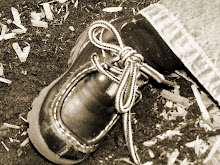
I thought that I had a decent awareness and understanding of concepts like accessibility and inclusion, of not just tolerance but acceptance of individuals with disabilities in society as equals especially because of my experiences as a special education teacher and advocate for inclusionary practices in education. Perhaps my awareness and education about the subject was greater than average, but it was still so incomplete. This has become clear to me recently as I have found myself interacting with the world from the position of one requiring a wheelchair for mobility due to a still unexplained loss of muscle strength and change in muscle tone. I have discovered that accessibility is so much more than I would have ever imagined. There are so many subtle issues to being able to access a store or a building that I never considered, far beyond whether there are stairs or a ramp. Things like adequate aisle space, objects cluttering and blocking the aisles, the positioning of so many objects so far out of reach, and certain areas of stores being designed in such a way that it is impossible to access them in a wheelchair. It is also attitudes. I have been blatently stared at while out in public countless times, as if my humanity disappeared the minute I ceased to use my legs as my primary source of mobility. Then there is the constant assumption that because I am using a wheelchair to access the world, I must have surrendered a great portion of my intelligence as well. My heart breaks for how my kids must be treated in public, the stares and comments and the lack of dignity when they are spoken to and how desperately they must long for a way to communicate the message that they are still kids and to get over it. I have to rely upon publc transportation right now, since my vehicle is still hundreds of miles away and I do not think I would be permitted to drive anyway, and this too has been a startling experience. It has been engrained into my being that all people are people first and then they may happen to be people with a disability, but apparently few people in the world recognize this. I have been referred to as "a wheelchair" more times than I can count. I am not a wheelchair anymore than someone who walks is sneakers - my method of mobility does not define me- yet how often this happens to my kids breaks my heart. They are automatically defined not by their unique personality, not by the fact that they are children, but by their diagnoses and disabilities. For convenience, for ignorance, for prejudice, for simple labels they are reduced to that with which they struggle instead of all that is so gloriously right and perfect and beautiful and incredible about them. My first year teaching I heard my assistant refer to my children who were non-ambulatory as "wheelchairs" and gently, but firmly explained that I would not tolerate such language never expecting to hear it again. I am saddened that so much ignorance remains and to know that this is the world my kids are up against. Yet I am all the more proud of them for their spirits, for their determination, and for their families who are unwilling to conform to the definitions provided by the world for their children or themselves. Right now seems like a very difficult time in my life as I am having to fight so hard to regain all that I have lost, but I have also gained so very much. I have gained such incredible insight and awareness of the world faced by my kids and their families that I could have never known without living it myself, and I will treasure the wisdom and appreciation from this journey that has changed my heart forever. If anything this will have made me a more dedicated, passionate, compassionate, aware, and advocate teacher.

Monday, December 29, 2008
Coup
I have not written here in a long time, and that is because I have been busy trying to fight back the coup that my body is staging against me. Apparently it does not appreciate the governmental system of my body, but since this is not a democracy but a monarchy (I am the Queen in charge of this vessel) it is just going to have to deal. Since October 23 I have spent 22 days total inpatient in two different hospitals and countless days undergoing outpatient testing. So far I have received the brilliant diagnoses of malnutrition and failure to thrive, which I believe are a given since I have lost over 25% of my body weight since October 23 and certainly can not intake enough of anything to get the nutrition I need. However, without a cause that is clearly defined on their testing (and dysautonomia does not cooperate like that) the doctors refuse to do anything other than monitor the weight loss and provide some supplements. I am also going to be receiving PT and OT services since the malnutrition triggered rapid, progressive muscle weakness and worsened the ataxia. My two new escorts are my wheelie walker for very short distances (about 100 feet or less) and my wheelchair for anything longer than that. I think they sent over a child sized wheel chair because while the seat is perfect, the leg supports are too short if I put my legs up any higher than down at 90 degrees (which is uncomfortable) even on their longest extension. So my wheels need some adjusting (also, a seatbelt would be helpful to keep me from falling out of the darn thing, especially when other people are driving it). I have not been able to teach since October 22, and I miss my kids beyond what words can describe. I knew that I wanted to teach special education since I was in sixth grade, so for me it is not a job so much as a dream and a purpose. To not be able to do so right now is frustrating and disheartening and painful. I want to be there with my kids, celebrating each victory and encouraging them to go beyond all expectations set for them and being creative until I find a way that works to teach and provide the information as well as allow them to communicate understanding. I detest being stuck at home (literally since I can not get down or back up the stairs), primarily in bed. I would most likely throw my TV out the window if I could do so as I by nature am not a huge TV fan (I happily went all summer without access to a TV) and after two months of this I have far surpassed my tolerance for it. I normally can not go more than a day or so without getting outside, yet I have been outside once since December 12 and that was for the ambulance ride home- stir crazy? I can only tolerate foods that are totally smooth and pureed, which means I never want to see or eat another mashed potato as long as I live once I am better, nor do I want to look at infant rice cereal. I can, however, offer recommendations on stages 1 and 2 infant food which is an odd skill to have. I am working with my home health care nurse to arrange for me to travel to where my family is while I recover, for accessibility reasons (I swear this house is trying to kill me - throw rugs, a bathroom that the walker only fits into sideways, hallways too small for a wheelchair, those stairs), safety reasons (probably not a good idea to leave a somewhat fall prone klutz with a walker home alone all day), and my willingness to ask for help (I live with amazing friends, but I hate asking for help and would rather go without or risk hurting myself than be a bother). So it looks like within the next week I will be home, surounded by my family and constantly having to remind them that medicine has never found nagging to be a cure for anything. :)
Anyway, I have not forgotten this journal but I have been engaged in medical combat with a firmly entrenched resistance force. I do have a CaringBridge journal that I started to help keep my family and friends updated, especially while I was in the hospital but I am continuing it. The address is http://www.caringbridge.org/visit/bethanysummer if you want to check that out in between entries here.
May 2009 bring us all health, safety, joy, providence, and abundant love!
Anyway, I have not forgotten this journal but I have been engaged in medical combat with a firmly entrenched resistance force. I do have a CaringBridge journal that I started to help keep my family and friends updated, especially while I was in the hospital but I am continuing it. The address is http://www.caringbridge.org/visit/bethanysummer if you want to check that out in between entries here.
May 2009 bring us all health, safety, joy, providence, and abundant love!
Tuesday, October 14, 2008
This is inclusion
Yesterday was field day at school, a day that I both love and dread each year with my students. I love it because we get to experience the closest thing to full inclusion that exists for m kids in this county right now. We go out and participate in every single activity that I can possibly modify, adapt, or make accessible alongside the general education population without any distinctions made (no special activities are designated for us, we do not attend at a special time or sit in the back row). We are kids having fun in a swirling mob of other kids. I dread it for a few reasons: 1) the logistics of planning how to adapt activities and to "off road" our wheelchairs up and down giant hills that are never accessible, 2) the logistics of mobile "crash carts" that must be assembled and taken everywhere without attracting attention from the other kids, 3) stupid adults who don't "get it". I must say that my kids had so much fun yesterday and we were able to adapt probably 70-75% of the activities for them to participate in. Favorites included t-ball, the 50 yard dash, the sack race, and the basketball toss. Apparently I throw like a girl (um, I would be worried if I didn't). A few run-ins with clueless or even prejudiced people made my protective emper flare momentarily, but then we moved on and had a blast. For example, a really cool semi-truck came that had a bowling lane in the trailer. I could see the parts to quickly place a ramp over the steps and make it accessible but the two men running it said there was no way to make it so our wheelchairs could go into the trailer, but we were welcome to carry the kids up and inside. HUH?!? Like that is safe, or legal, or not flat-out prejudiced. After my mini-education on discrimination the guys still played (or maybe were) stupid so we just let our sweet girl who can walk cut in front of the 50 other kdis in line and have a turn. We were willing to wait in line if they were willing to make it accessible, but not otherwise. Our other run-in was with a parent volunteers at t-ball who kept directing children to go around us in line and when I pointed out that we were in line replied "well, I just saw the strollers and the babies and thought you were only watching.". WHAT?!? I quickly pointed out that they were wheelchairs, that my kids are in kindergarten, and that they don't generally like being called babies. I said this very politely, but was told not to be snipey. Whatever. We spoke loudest with the incredible hits we made and the laughter that echoed as each child ran the bases. Give us a fair chance and you will be amazed by the things we can do. Label us babies and pass us by, and you will never know the potential we hold. :) Plenty of other people made up for those two issues - a bunch of fathers working the giant parachute jumped in and helped our kids be able to run in and out from underneath the parachute and mae sure we all participated and then asked very insightful questions about our program. At the sack race, kindergarten kids who know my kids from inclusion were cheering on my kids as we raced. ;) A little girl helped my kids at the basketball toss, and at bowling countless kids cheered on my little one who got the chance to bowl. All in all it was a great day. Everyone had a great time, but most importantly they had a great time alongside their peers without any great production made about it. This is inclusion- a little adaptation, a lot of creativity, many tender hearted children, and a focus on ability rather than disability. We make it seem so much more complicated than it needs to be. And instead of the fearful unknown that it is t many teachers, it is beautiful, it is natural, it is children being children before adults muddle it up and complicate it.
Sunday, October 5, 2008
She left her handprints on my soul

She was mine for less than 6 months, but the mark she left upon my heart will last a lifetime. When you are attending college to become a special education teacher, it is a common refrain from professors and advisers and supervising teachers that you must learn to separate you heart from your job in order to avoid "burn out". Perhaps this is sage advice, but I can not fathom trying to educate a child without forming a relationship of trust with them and in turn, I can not imagine building up a relationship of trust and understanding without loving the child. The children in my class are "my kids" and I willingly take the risk of loving them, of letting them into my heart, because I simply do not know any other way to be a teacher or a human being. She was "my kid" during my first year of teaching, a rough year for any teacher and an especially challenging year for me as I was indoctrinated using the "sink or swim" method. Her arrival was timed with Christmas, and so she was my present for the new year- a beautiful little girl with a multitude of challenges, so medically fragile and willfully strong. For 5 months I celebrated her steps, I learned the meaning of each sound that she made, I puzzled over ways to prevent her from pulling out her life-sustaining tubes (trach and g-tube), I explored the world with her and her friends. Then with little notice, just weeks after her fifth birthday, she was gone. I had played the odds of teaching open-hearted and lost. At first coping was focused around her family- preparing a yearbook signed by her classmates (fingerprints that I labeled) and teachers/therapists, printing all of the photoraphs we had taken of her, gathering her artwork, colecting donations to help the family pay for travel expenses, and sending out cards to them that came in from classmates. Then coping became about making it through the rest of the year in the classroom where she was noticably missing. Finally it became about finding the peace to know that loving her was worth the pain of letting go, and that the risks are worth the rewards. Yet I could not settle on such an inward transformation not somehow being outward; this little life has forever changed mine and I needed (need) that to be evident. So in a delicate line-drawing upon my back I had a tattoo plaed of a child's cupped hands opening to release a butterfly. It is the closure I needed, the permanent reminder I hold dear of how one life short on years can have great impact, and the hope (faith) I have for the future that love is always worth the risks.
Wednesday, September 17, 2008
Conflicted
This is my first year teaching in a program for students in grades Kindergarten through 2nd grade who have multiple and/or severe disabilities. While I could write a novel already on the rapid learning I have had to experience (because no one ever thinks to provide you with necessary information until after you manage to screw up - not with the kids, with curriculum guidelines, classroom organization, unwritten rules, etc.), I am currently very conflicted about one hot button issue. Inclusion is the hot topic in our district. You would think it was a new invention the way it is being talked about and handled instead of a practice that has been demonstrated beneficial and successful at all grade levels and at all ability levels (based upon what criteria you are assessing). We are not actually anywhere near full inclusion, and I don't think anyone mentions that, but we have inclusion committees at every school and we dance prettily around the issue to keep everyone happy (or at leas amused). My class is in a general education elementary school but my students are primarily self-contained, if not entirely self-contained (the most inclusion any student receives is up to 2 hours per day). I can argue both sides of this issue convincingly after hearing all of the debates since I was in high school and am not conflicted over that. What I am conflicted over is a long-standing "tradition" at my school. Apparently it is traditional to have each and every class at each and every grade level come into my classroom to "meet" my kids, to be "introduced" to them, and to "ask any questions they may have" - all in the name of promoting acceptance, tolerance, and inclusion. While I agree that information is power and I support a climate that welcomes diversity and is accepting and appreciative of all students I do not feel like this is right. Having four or five classes at 6 grade levels come into the classroom (over 600 students) to sit in rows and stare at my kids just feels wrong. My kids deserve the same dignity, respect, and integrity that is offered to all of the other students. They are not tools t be used in an object lesson. They are incredible individuals with unique thoughts, unique spirits, with unique desires, with unique likes and dislikes - but they do not have the ability to speak for themselves and say whether or not they want to be used in a lesson on disability, inclusion, tolerance, acceptance, and being different but still the same. So I feel that it is my job to speak for them, and my voice in my heart is screaming "NO!", it is screaming that this is degrading, that it is dehumanizing, that it is only further separating my children from everyone else in an "us and them" mentality, that instead of creating inclusion it will create a "school mascot" situation where they will be patted on the head and talked to as if they are cute little pets. Yet this has supposedly been done for years with tremendous success. Am I overreacting and reading too much into this? Or am I the first person in a while to consider that perhaps my children deserve a little more dignity and respect? Please share your opinion!!
Monday, September 1, 2008
The List

Every so often I open up the wooden box that holds my most precious little treasures and remove a single piece of paper from the plastic bag that protects it so that I can not just read the list of dates and times that cover both sides but touch them. I can feel the writing that records each time my infant self danced with death, and each time those who love me cut in and reclaimed me. Some of the dates are simply noted with a date and a time, some are noted with a date and time, others indicate that 911 was necessary, and then a few are circled to indicate that these were the episodes when I danced with death the longest. One in particular is circled in red, the episode that changed how my entire family views life. When I was 5 months old, my parent's were asked to meet with the group of doctor's that were providing my care at Children's Hospital in one of the conference rooms. I had been diagnosed with what was then labeled "near miss SIDS" a month or two prior when my mother discovered me without respiration or a clear pulse shortly after I had fallen asleep. No medical explanation for the severe apnea episodes was ever established, and so after running every test they could imagine the doctors had sent me home with an apnea monitor and the reassurance that I would outgrow the episodes by my first birthday. The issue was that in the early 1980s the apnea monitors were not very portable, and they did not function at all in automobiles. My parents had stayed out later than they planned, and on the drive home I accidentally fell asleep in the backseat. My mother was frequently checking my breathing, but in between those checks I slipped quietly into an apnea episode. When she discovered that I was not breathing the choices available to my parents were limited - the stimulation that usually roused me was ineffective, there were no cellular phones, and attempting CPR on the side of a rural Michigan road could be disastrous if I did not respond a there was no way to summon help. My father immediately began to drive to the nearest hospital while my mother attempted CPR (CPR in a Jeep at night is quite a challenge). When they arrived, my mother ran into the Emergency Room carrying me (at that point I was a limp infant lacking both respirations and a heartbeat and had progressed from the familiar blue tinge to a grayish color) in her arms and screaming. She noticed a doctor behind the counter and literally threw me to him screaming that he had to save her baby. Somehow he managed to convince my little body to restart itself, but he was so certain that I would crash again and not survive that he traveled with me in the ambulance for the transfer to the Children's Hospital well over an hour away. After stabilizing me and conducting further tests, my parents were asked to attend that meeting. It was at that meeting that the doctors, among the best pediatric physicians in the region, pronounced that I had been without oxygen for far too long and had suffered profound brain damage. My prognosis was officially changed to terminal with a life expectancy of less than 1 year of age, and my parent were told that even if a miracle occurred and I managed to survive longer my brain had been so badly damaged that I would never progress any further than the skills I possessed prior to that night in the Jeep. They strongly encouraged my parents to leave me at the hospital and allow the medical staff there to care for me until my imminent death. I do not know how my parents processed all of the information that was thrown at them, but I went home with them very soon after that meeting. I continued to have apnea episodes, some minor and some severe enough to require full CPR, up until just before my first birthday and then they abated just as originally predicted. As far as the doctor's predictions, my parent's fears dissipated slowly as I met each developmental milestone and then were dismissed when I began to read at the age of 2 1/2. The only remaining signs of any brain damage are gaps in my abilities to process visual-spatial information. There is no medical explanation for how or why I defied every single prediction of the doctors and the word miracle has been used even by those in the medical community. When I was sixteen years old, my mother and I returned to the emergency room where I was first treated on that night when I was 5 months old, and had the opportunity to meet with the doctor who had cared for me and gone above and beyond to ride with me in the ambulance during my transfer to Children's. As my mother began to explain who she was, he instantly remembered that night and offered condolences to her for her loss as he was certain that I had not survived. It was an amazing experience to be able to thank him and to be a living example of the fact that statistics are just numbers on a page and God is never limited by something so small. As a result of having to fight so hard to keep me alive as an infant, not to mention an entire childhood of battles, my family learned to live in each moment with no regrets. I never had any illusions growing up that I was invincible or that lie was a game; I knew from as far back as I can remember at least on some level that every moment was one that according to everything medical science knew I should never have had the opportunity to experience. So far I have now had 26 "bonus" birthdays that my family was told I would never experience (I just turned 27) and 26 "bonus years" of incredible experiences, memories, and love. When I become too caught up in the small things in life, when I lose sight of just how incredibly blessed I am, when I begin to get frustrated over the medical issues that continue in my life, or when I just want to reconnect to the incredible gift that each moment of my life truly is and the responsibility that I have to live my life in every moment with purpose I simply return to that list of dates, times, and the amazing effort that not just a family but an entire community offered up to give me a chance to be alive.
Sunday, July 27, 2008
Perfectly Imperfect
One of the greatest gifts of humanity is that of imagination, the ability to look beyond the situation and see what could be, what might be, what is possible, or even what may see impossible but wonderful. Imagination allows all progress to occur, it allows for innovation and invention, it allows for creativity and art, it creates opportunity for reflection, it offers beautiful escapes. It shapes friends for young children, dream worlds, wishes that we hang upon stars, goals that we strive for, worlds that we long to create, and an ideal of how we can make a difference. Yet with imagination comes a darker side, the ability to look at a situation and imagine all of the possible different outcomes, to ask over and over the two word question that can rip apart the soul, "what if?". We can spend our entire lives imagining "what if" things had been different, "what if" one event had been changed, "what if" this or that had never happened. I used to imagine what my life would be like if I had been born healthy, with every gene perfectly in place and every cell programmed to work exactly as designed. "What if" I had never experienced repeated periods of severe oxygen deprivation as an infant? "What if" I did not have dysautonomia, juvenile onset SLE, ataxia, etc.? "What if?" I had not been the child that was always slower at physical activities, that sometimes actually wished that the hidden medical differences were somehow physically apparent so that others could better understand, that was intimately familiar with hospitals and doctors offices? In my heart I rebelled against "being different" and detested that which I felt made me so, even as I was drawn to and adored the differences in others. As I have grown older I have realized that trying to imagine my life without these characteristics is virtually impossible. It is like trying to imagine a world in which you exist but you are a stranger to yourself. From where I am now, I realize that in order to become the exact person that I am, in order to be able to offer the exact set of skills and insights in my work as a teacher and in my life, in order to have the appreciation of life and the awareness of its incredible fragility, I could not have traveled any other path. As strange as it may sound to anyone else, I am thankful for the exact experiences that I have had, for the exact way that God has made me, and for the fact that I was made perfectly imperfect. That does not mean that I do not become frustrated at times with the limitations of my body, with the seemingly endless medical tests and appointments and medications, and with the conflict between the desire of my heart and the function of my body. There are times when it seems overwhelming, or when it seems like almost any other way would be easier. But no other way other than the one I have already traveled could have lead to where I am now, to who I am now, which I would not sacrifice for anything. Even though the journey has been and most likely will be incredibly difficult at times, I can say with certainty that the views along the way are breathtaking, the companions you meet life changing, the wisdom you gain beyond expectation, and the destination worth any sacrifice. So instead of following my imagination along the endless loop of what if, I have discovered that I am incredibly thankful and proud of the fact that I was created absolutely perfectly imperfect.
Subscribe to:
Posts (Atom)